

F1 VR Experience
Immersive Data Visualization
Designing a Spatial, Data-Driven Live Viewing System
Role
UX/UI Designer
Timeline
Fall 2026 - 4 weeks
Project Type
Directed Studio (Senior Project)
Tools
Figma
ShapesXR
Meta Quest 3S
Cursor
Background
Formula 1 is one of the world's fastest-growing sports, yet the viewing experience remains largely unchanged.
Problem
Traditional broadcasts provide little control over how fans consume a race, creating a passive viewing experience.
Solution
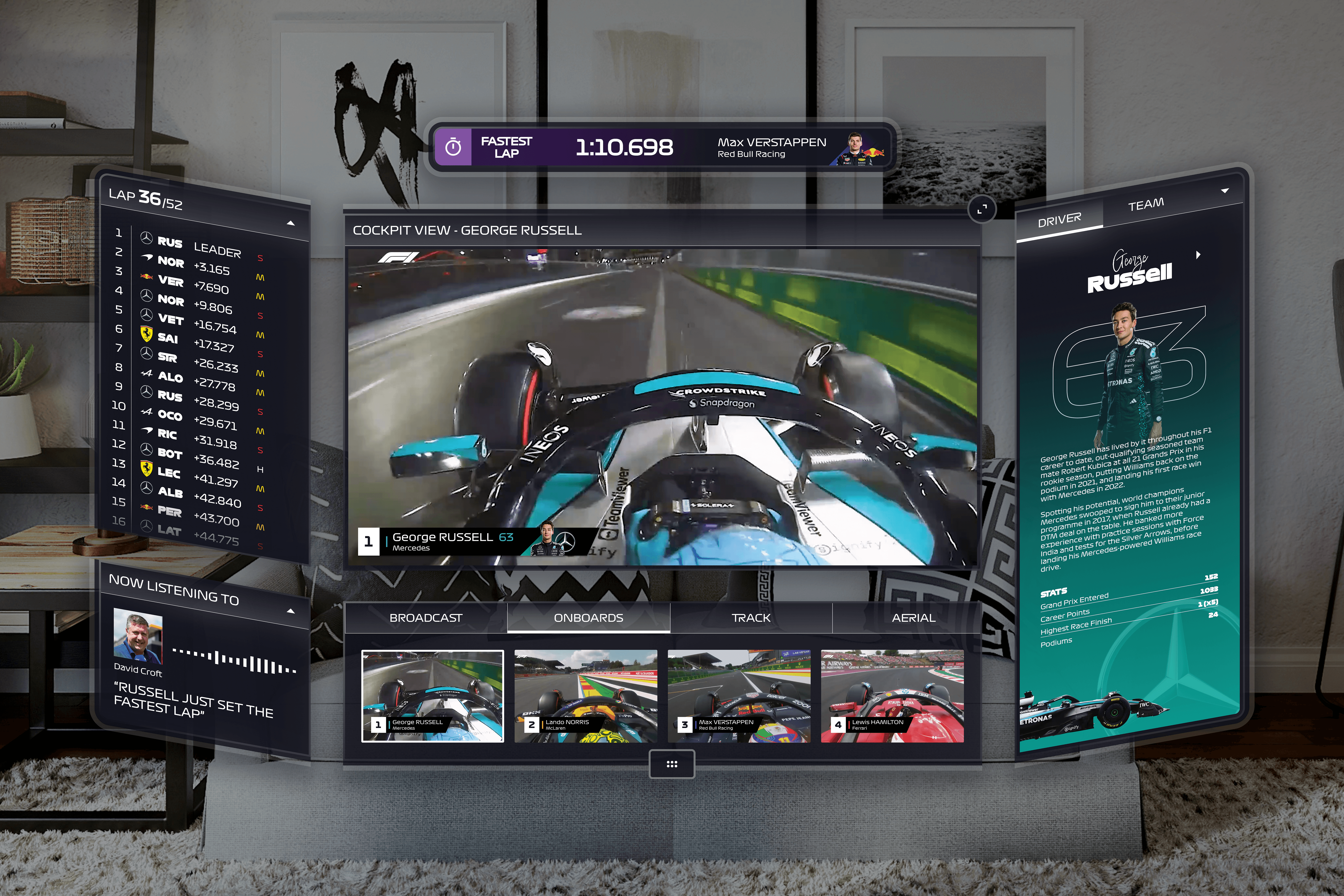
Designed a VR companion platform that allows fans to explore race data, camera feeds, and driver information spatially.
Outcome
Created a modular spatial viewing system optimized for comfort, clarity, and long-duration race sessions.
Problem
Why This Project?
Unlike most projects, this did not begin with a traditional pain point. Instead, it began with an opportunity.
Formula 1 fans consume an enormous amount of live information:
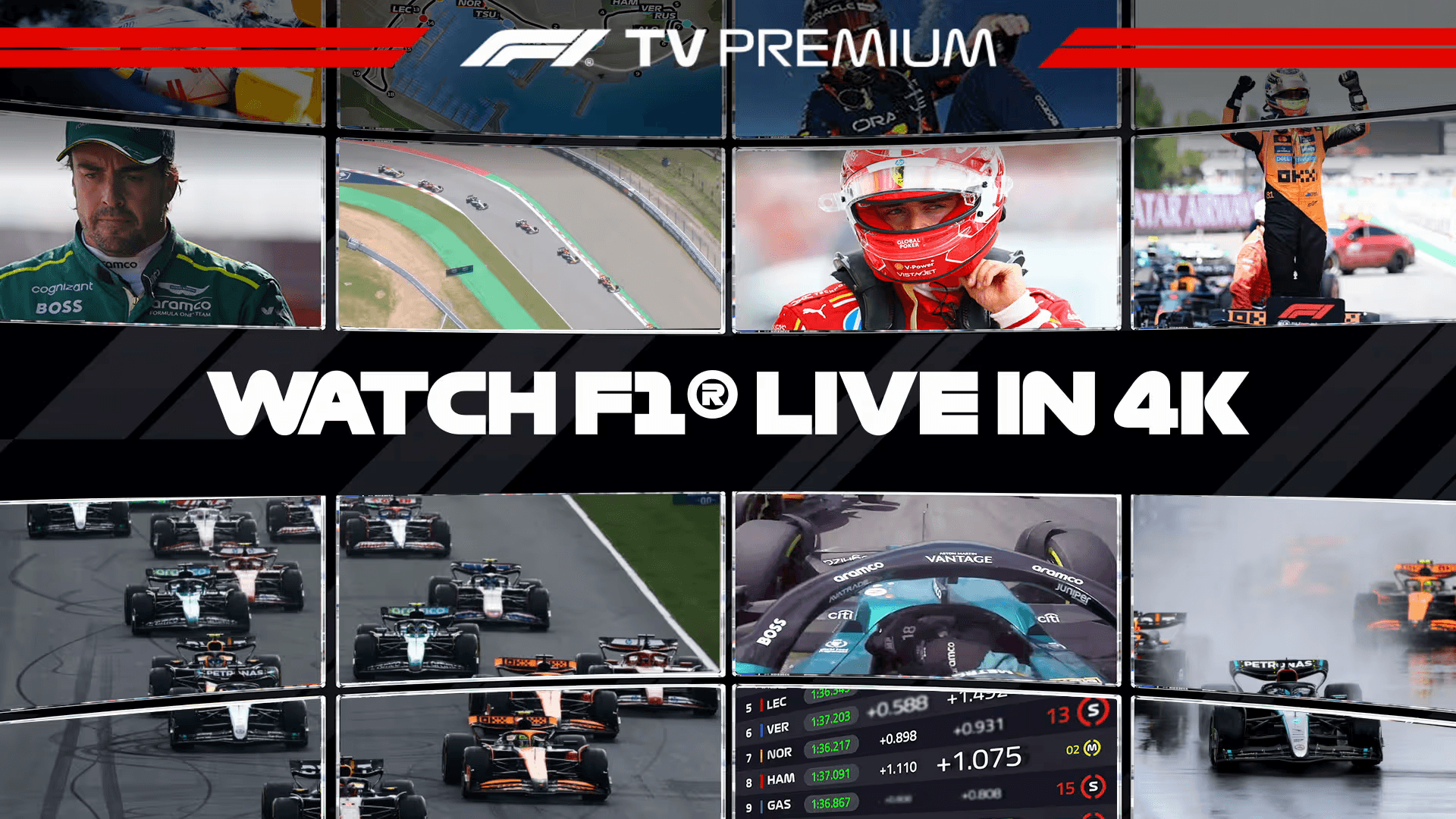


Yet all of that information is constrained to a flat screen controlled by a race director. At the same time, no native Formula 1 VR viewing experience currently exists. Fans who attempt to watch races in VR rely on browser workarounds, screen mirroring, or virtual desktop applications.
The Presented Opportunity
What if Formula 1 viewing was designed specifically for spatial computing instead of traditional screens?
Solution
Core Concept
Rather than recreating a television inside VR, I approached the experience as a racing game HUD. Instead of replacing the broadcast:
The platform augments it.
The live race stream remains the primary experience while supporting information becomes spatially distributed around the viewer.
This allows fans to:
01
Watch the race
02
Monitor standings
03
Switch onboard cameras
04
Access driver information
05
Follow race events
without leaving the broadcast

Constraints
Platform
The experience was designed primarily for Meta Quest-class headsets. This platform was selected because it represents the largest consumer VR install base and the most realistic entry point for a future Formula 1 product.
Key Constraints
Long Viewing Sessions
Formula 1 races regularly last between 2–3 hours.
Battery Limitations
Consumer VR headsets have limited battery life.
Motion Comfort
Frequent head movement can create fatigue during extended sessions.
Real-Time Data
Race telemetry and broadcast information must update continuously.
Design Principle
These constraints led to a core design principle:
The experience should support long-duration viewing with minimal cognitive and physical effort.
Design Decisions
Decision #1
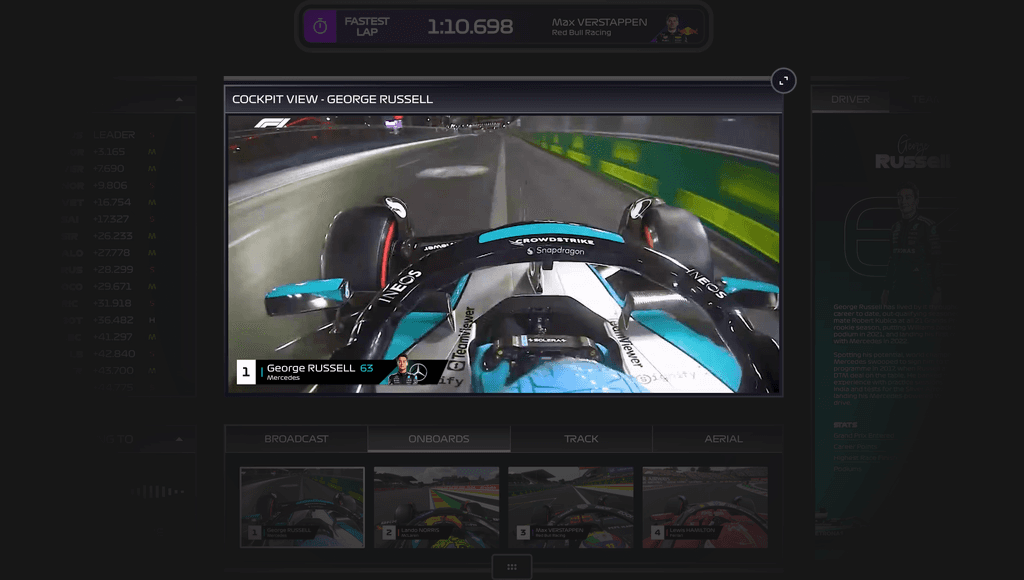
Fixed Central Stream
Problem
Users should never lose the race
Solution
The live broadcast remains anchored in a fixed central position
Why?
Reduces head steering
Creates a consistent focal point
Mimics familiar television behavior
Improves comfort during long sessions
Outcome
Users can quickly glance at supporting information and immediately return to the race.
Decision #2
Spatial Zones
Problem
Race information competes for attention.
Solution
The interface is divided into three spatial zones: Left, Center, Right. Each zone serves a distinct purpose.

Outcome
Users spend less time searching for information and more time watching the race.
Decision #3
Window Hierarchy
Problem
Not every piece of information deserves equal prominence.
Solution
Created a hierarchy of windows: Primary, Secondary, and Support.

Outcome
Clear visual hierarchy reduces cognitive load.
Decision #4
Modular Window System
Problem
Future race experiences may require new information modules.
Solution
Windows were designed as reusable system components.
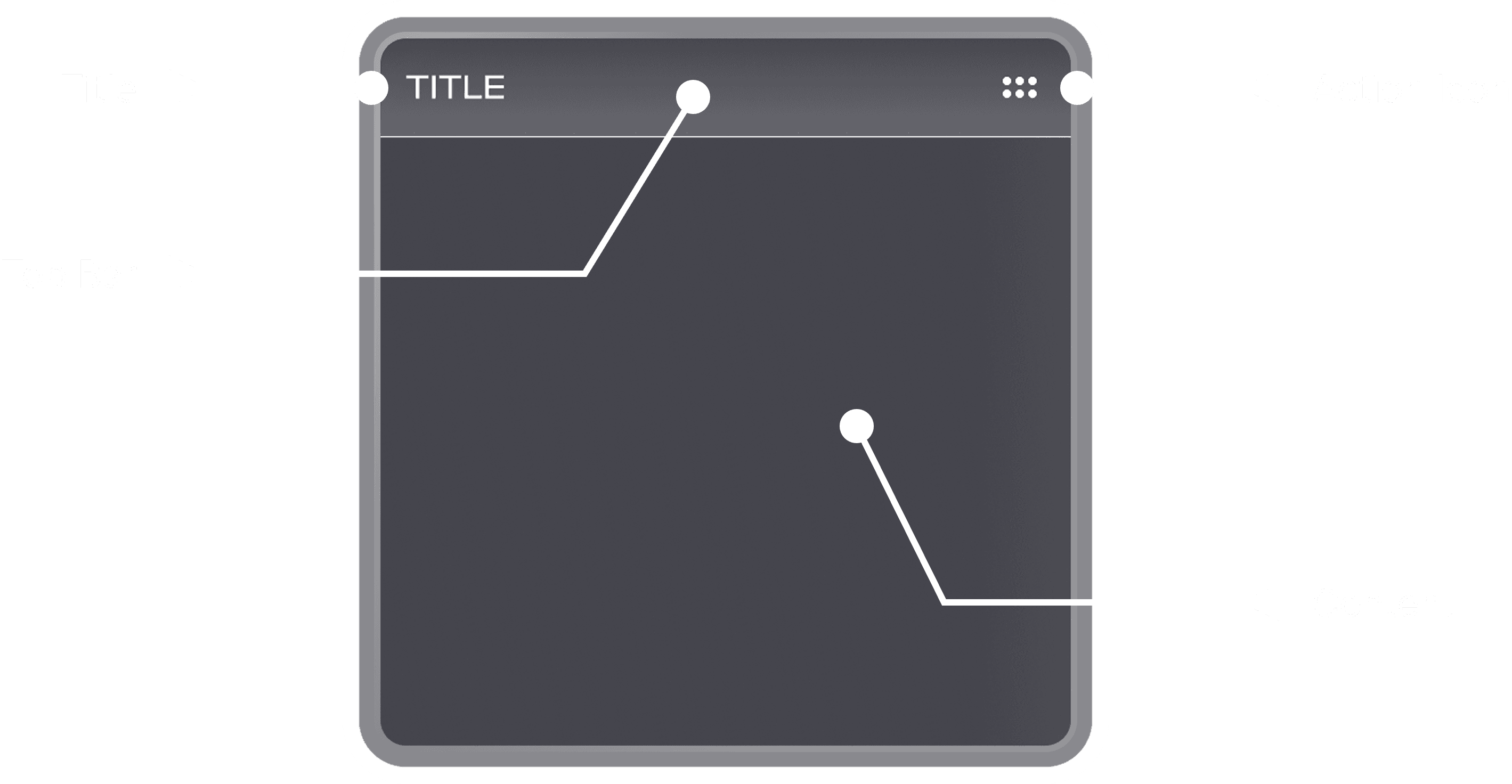
Each module can be added, removed, resized, or repositioned without redesigning the interface.
Outcome
The system can scale as new race features are introduced.
Design Iterations
Early Exploration
I explored three visual directions
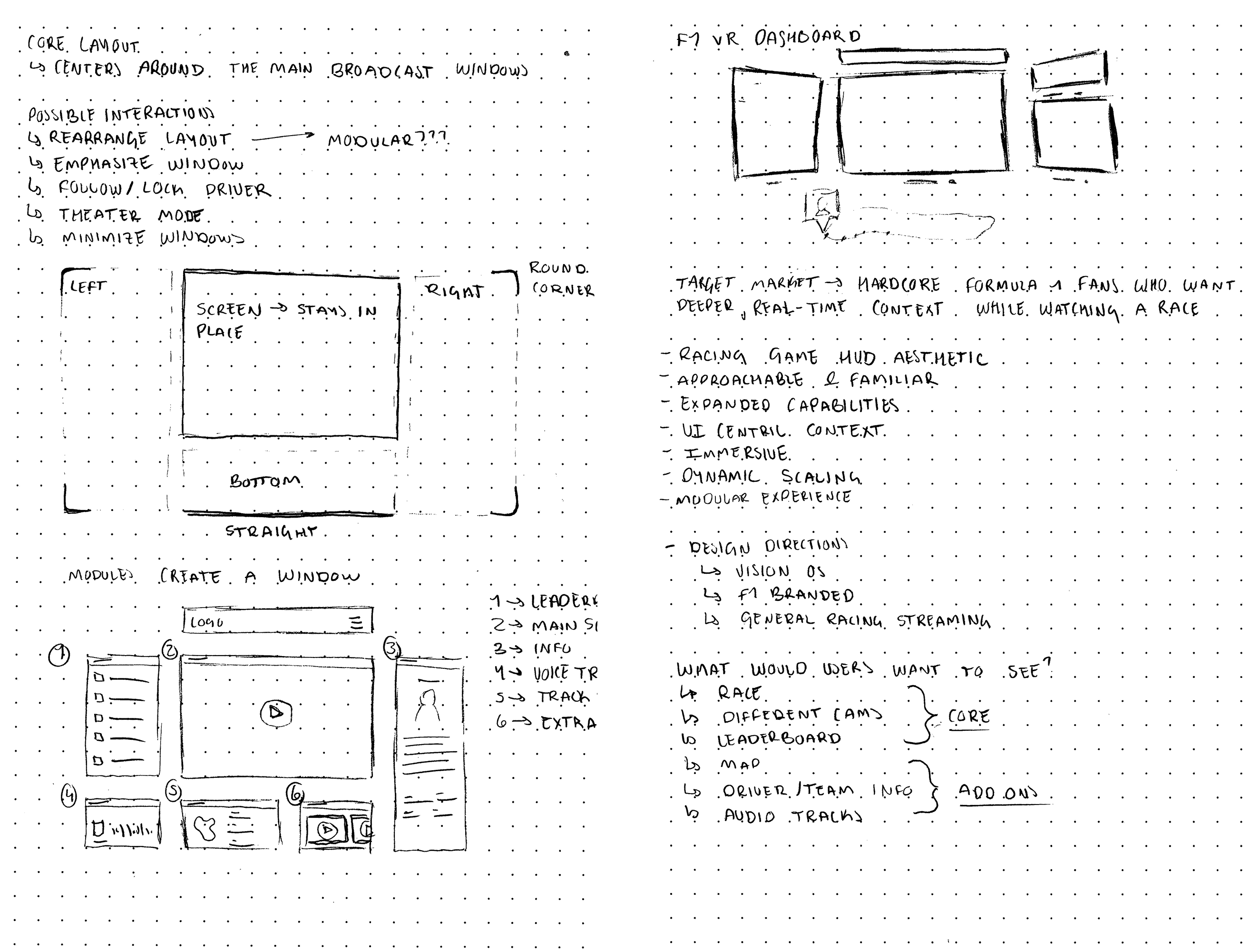
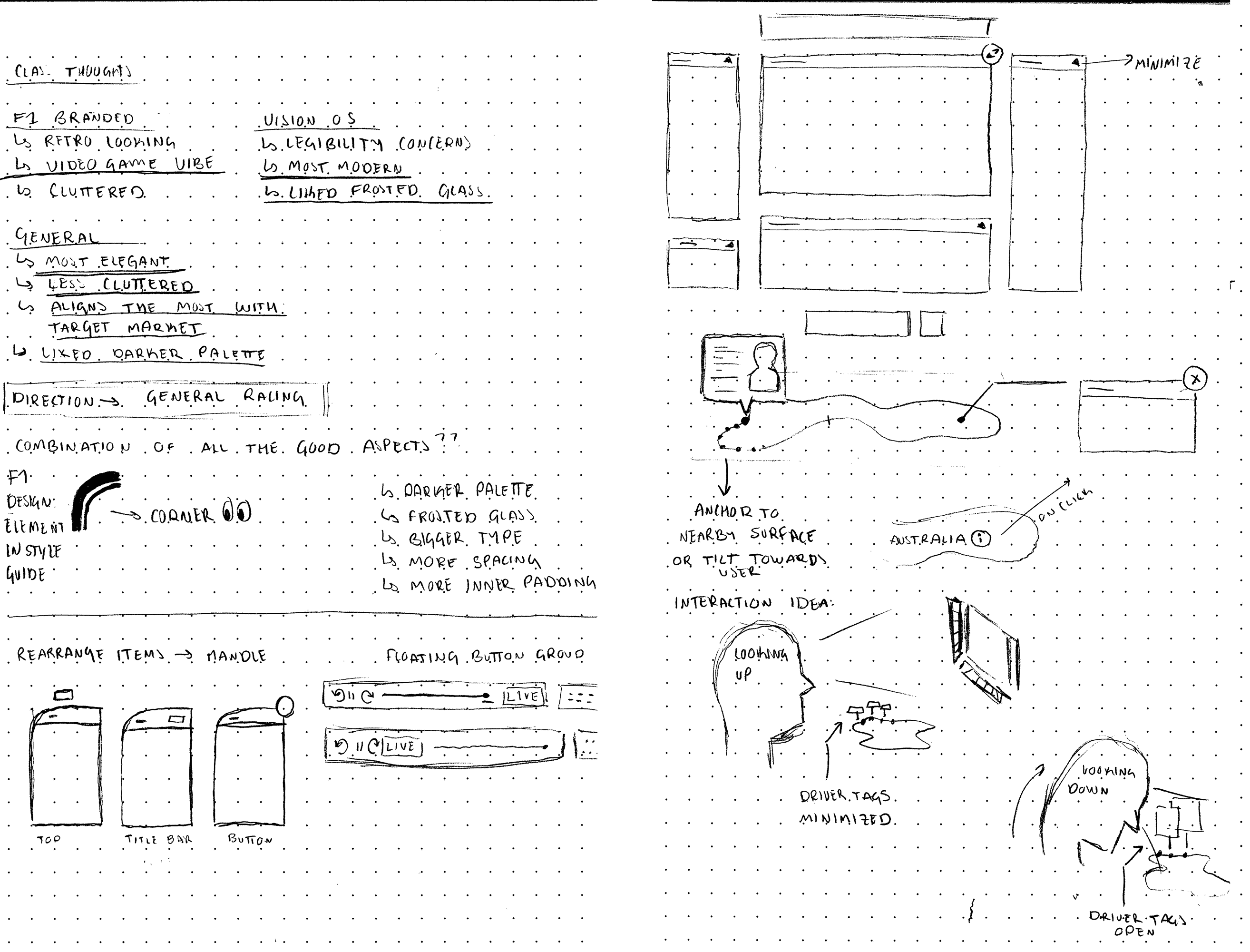
Direction 1
F1 Broadcast Style
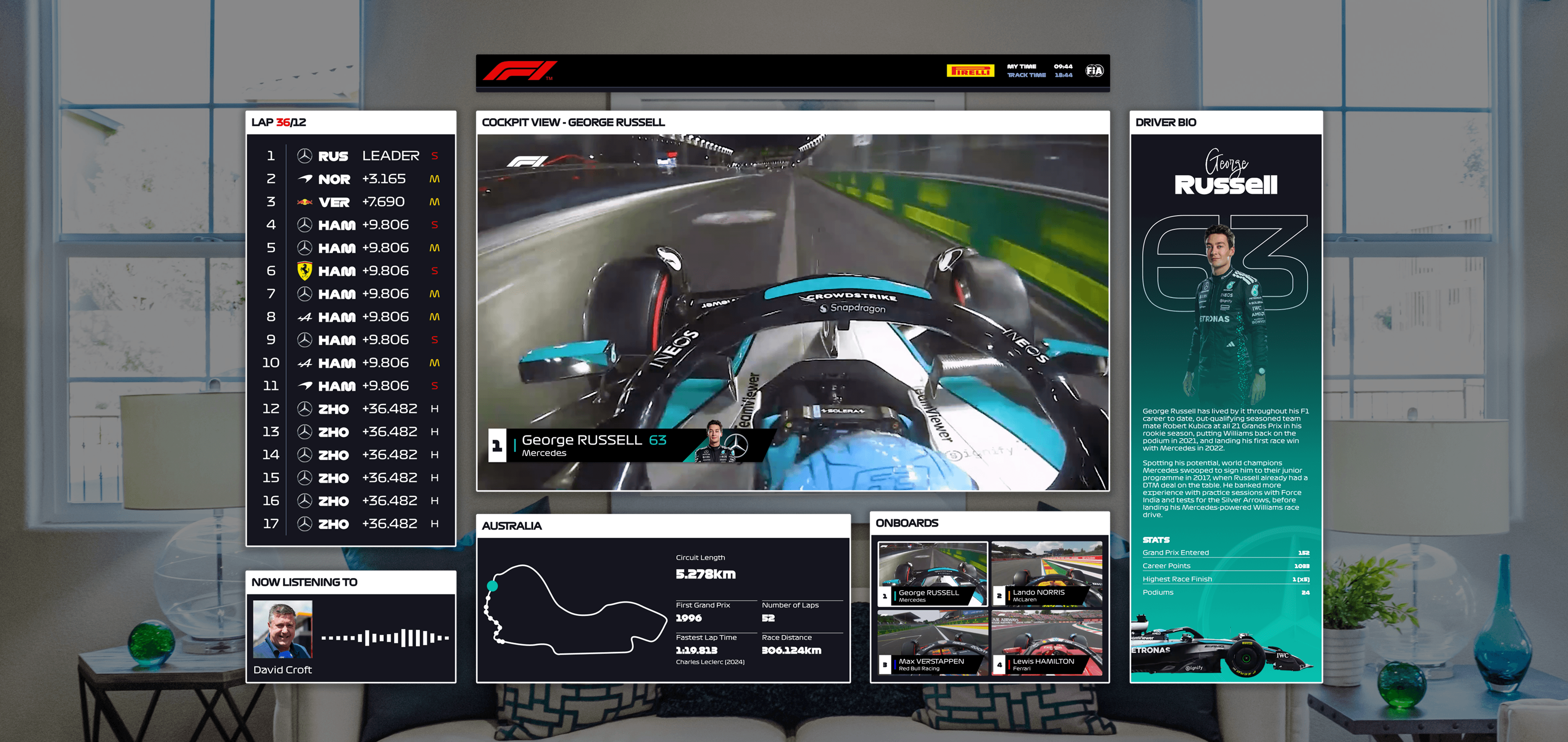
Pros
Familiar
Brand aligned
Cons
Dense
Visually noisy
Direction 2
General Racing Interface
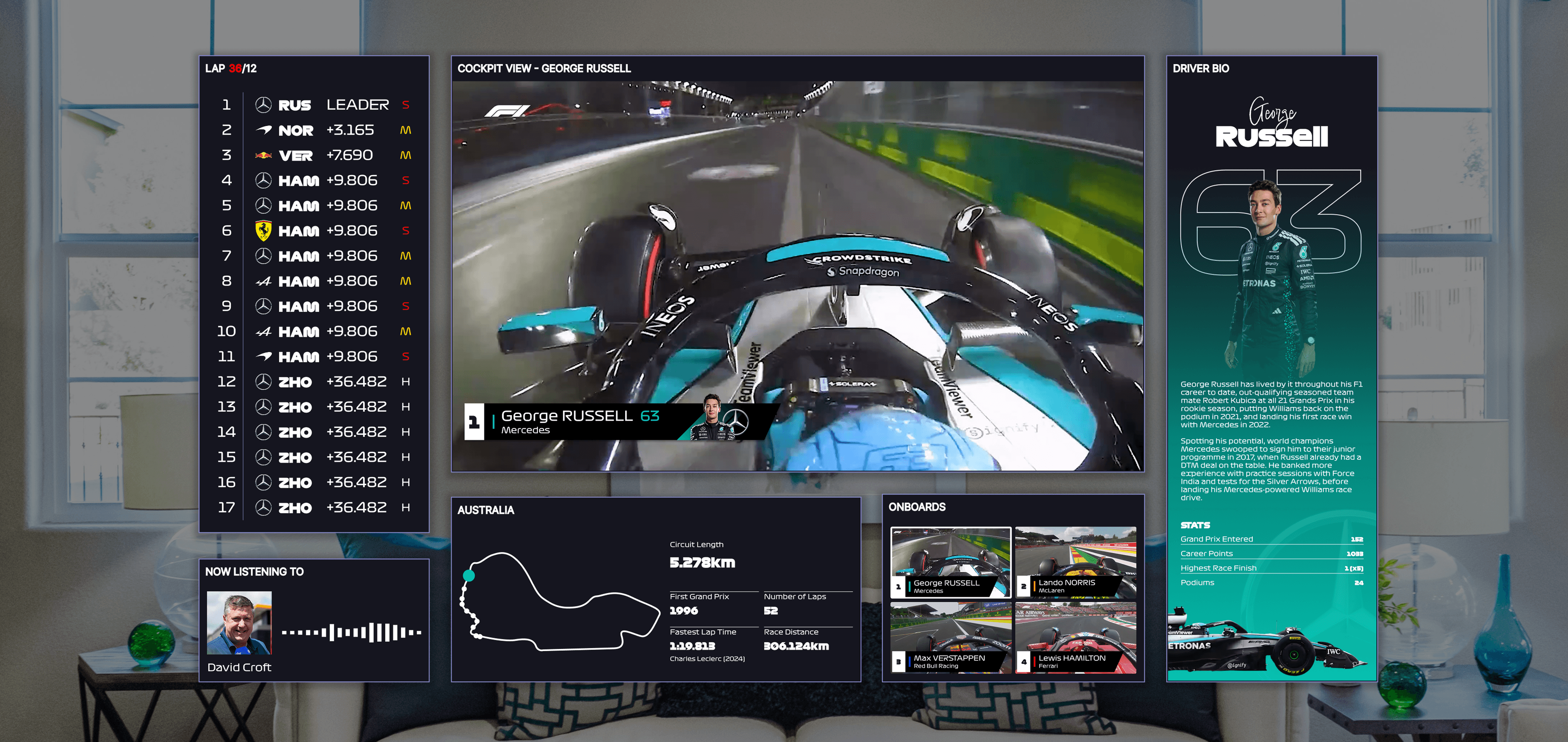
Pros
Cleaner hierarchy
More modern
Cons
Less distinctive
Direction 3
VisionOS Inspired
Pros
Spatially native
Elegant
Cons
Risked prioritizing aesthetics over usability
Final Design
Final Direction
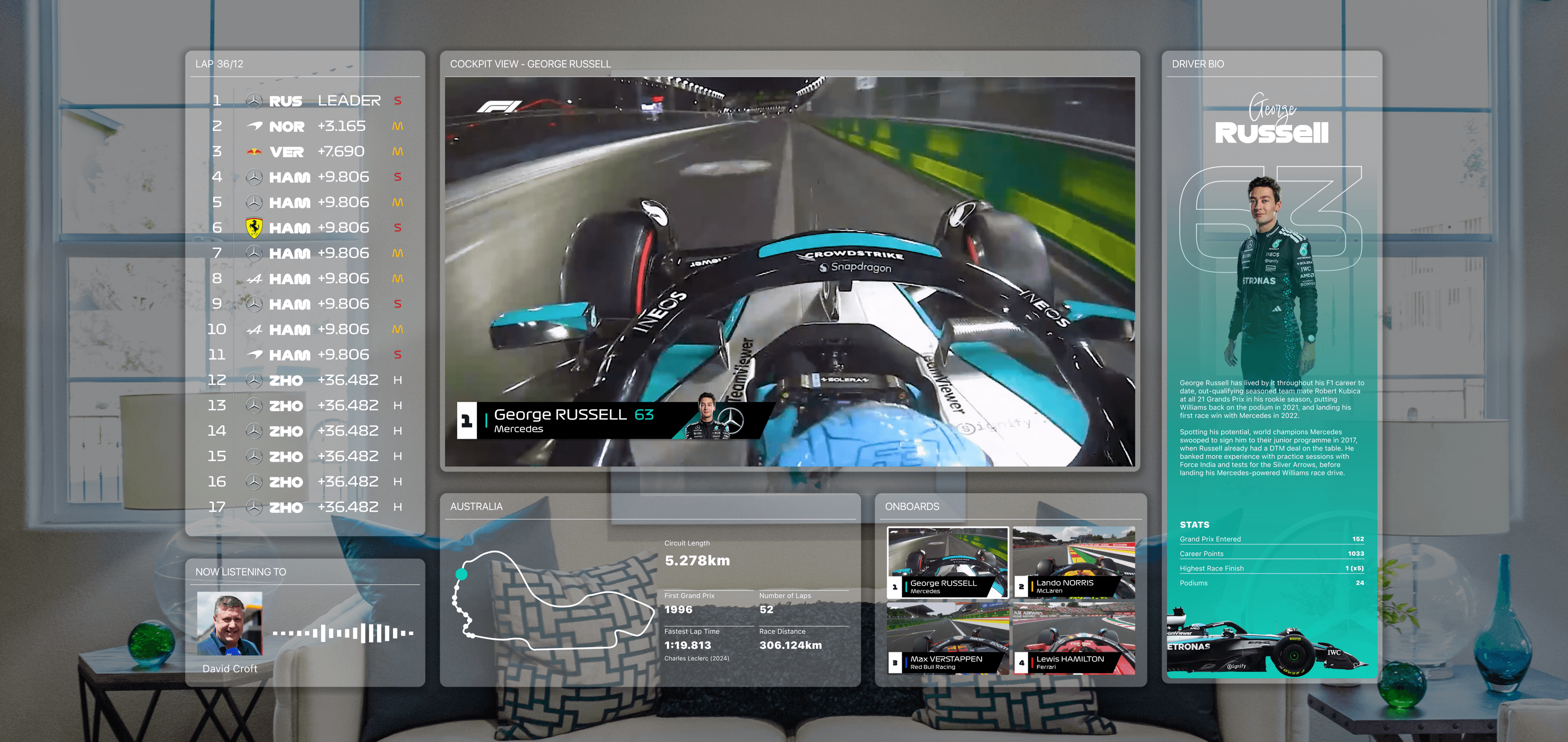
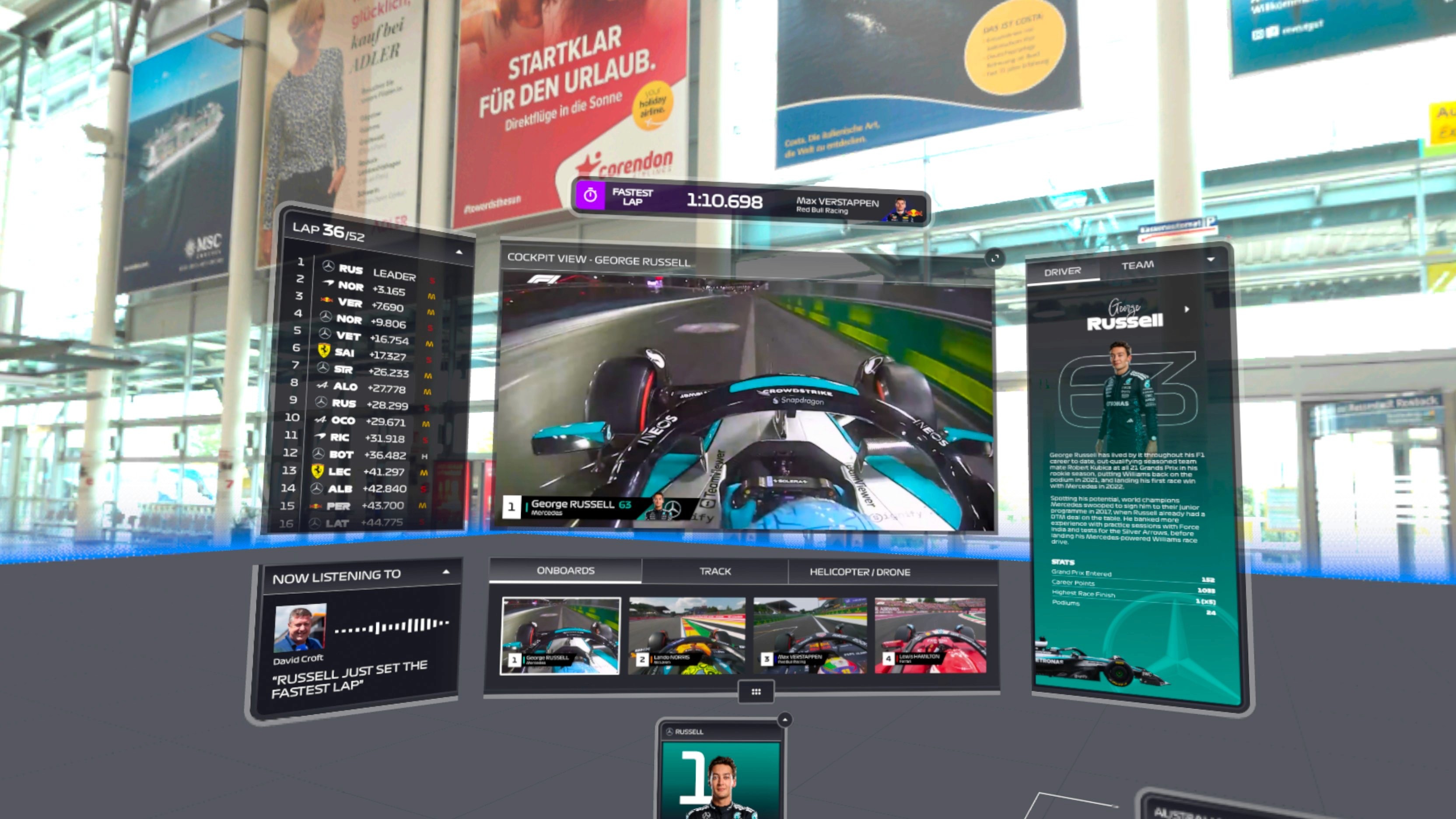
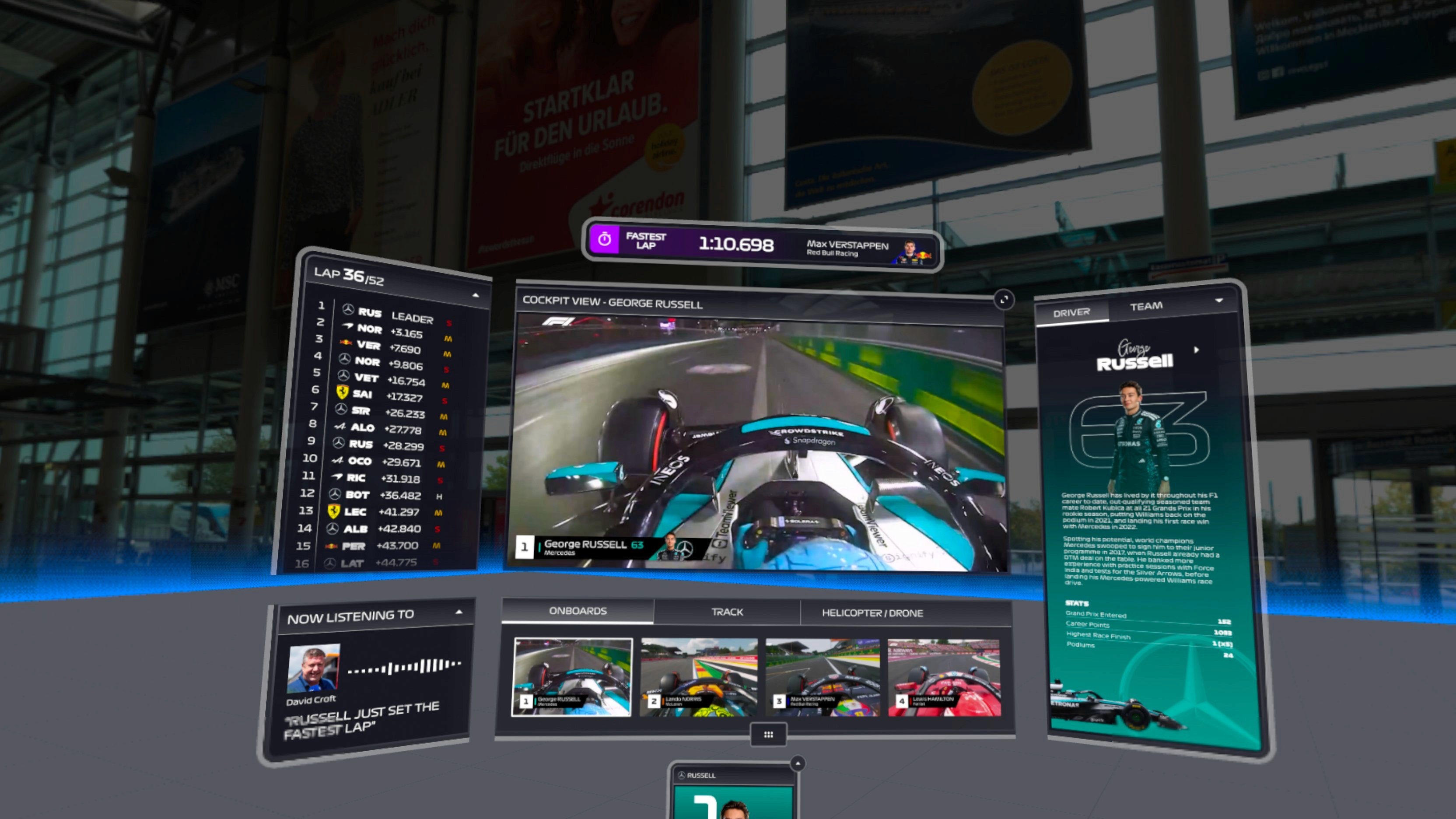
The final solution combines the F1 visual identity, modern racing interfaces, spatial computing principles This hybrid approach maintained familiarity while reducing visual complexity. The race stream remains the visual anchor. Supporting information surrounds the broadcast without competing with it.
Secondary Components


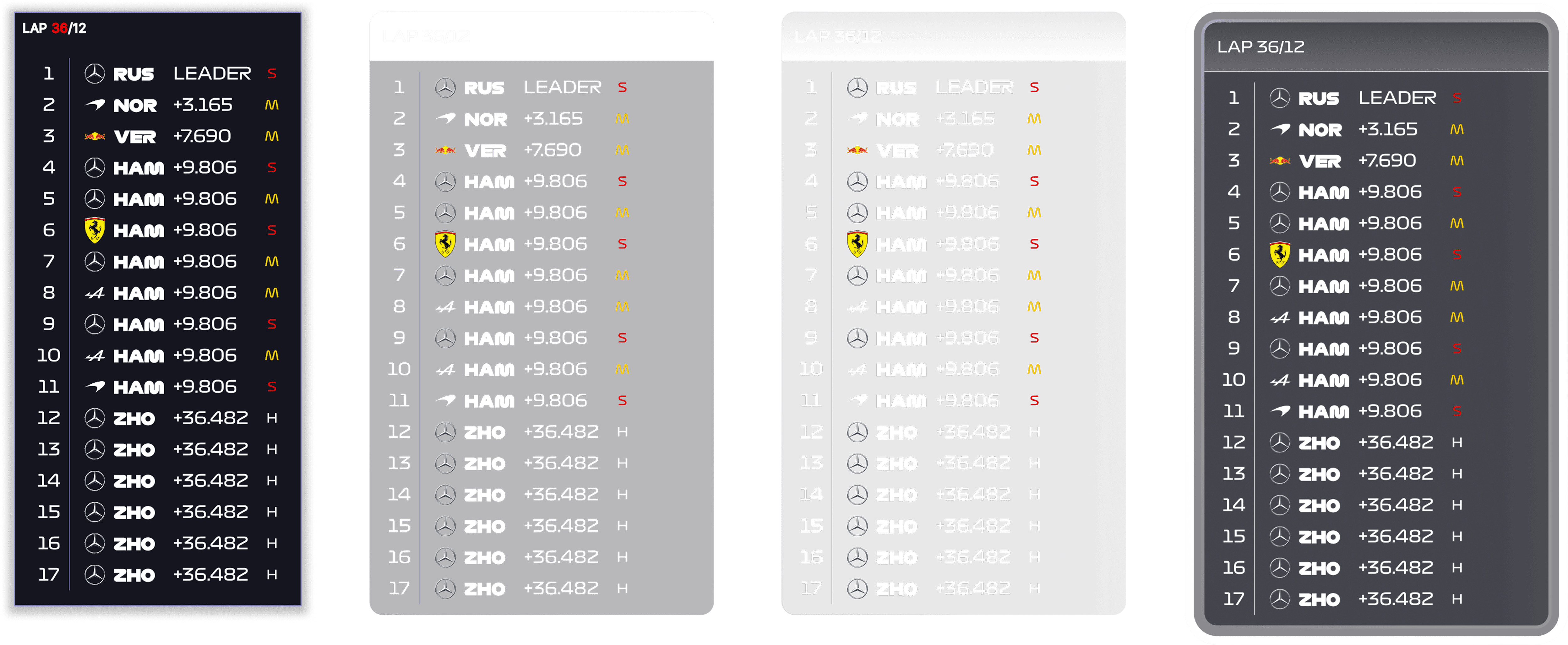
Camera Browser
Switch between: Broadcast, Onboards, Track cameras, and Aerial views
Support Components

Notifications
Race control events including: Yellow Flags, Red Flags, Safety Cars, Fastest Laps

Track Map
World-anchored spatial track visualization
Validation
User Testing
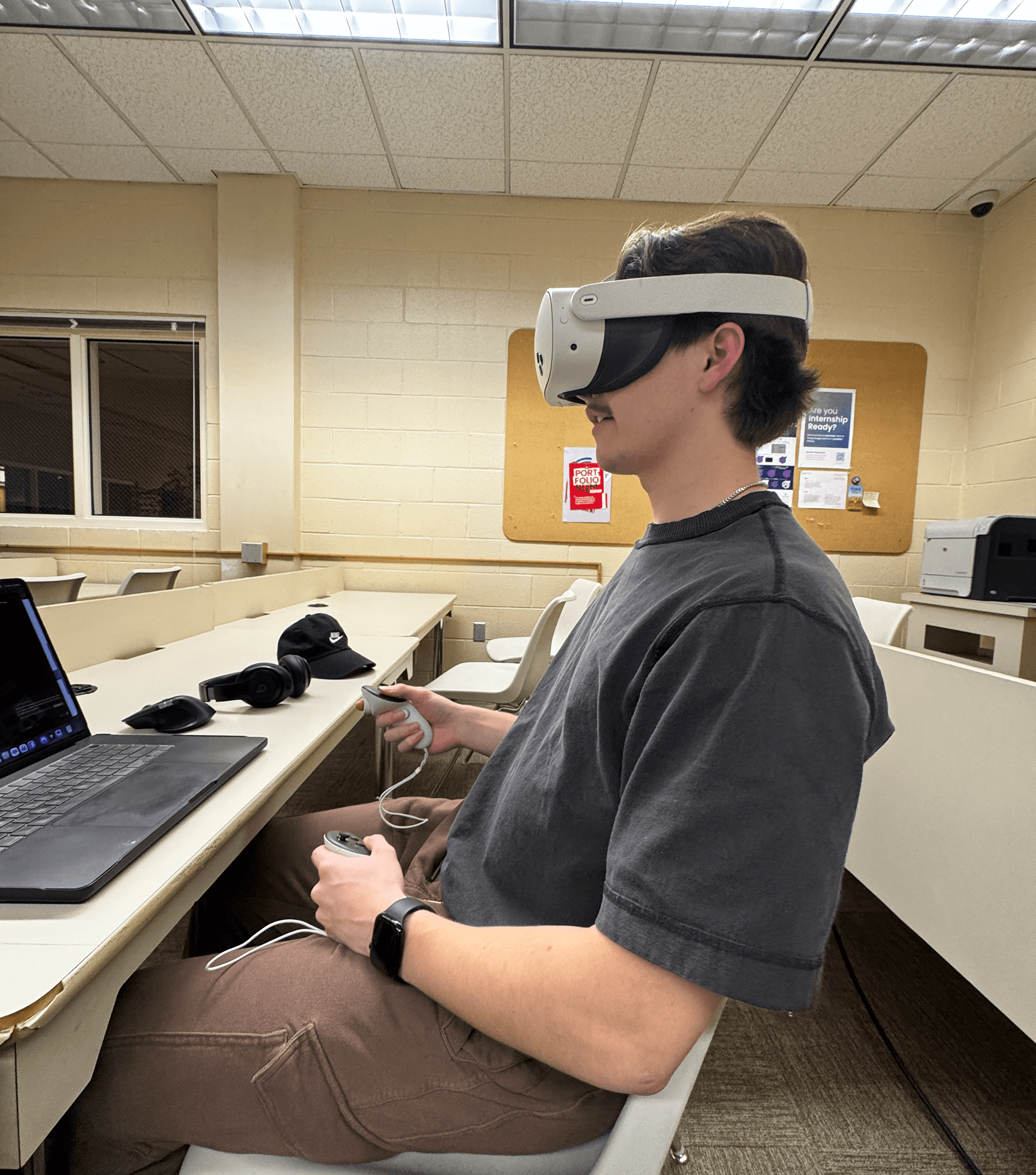
I tested the concept with experienced Formula 1 fans using Meta Quest hardware. The objective was to evaluate:
Comfort
Spatial understanding
Information clarity
Key Findings and Results
Finding 1
Users preferred keeping the race stream fixed.
Maintained fixed central stream
Finding 2
Peripheral information worked best when secondary to the broadcast.
Strengthened hierarchy
Finding 3
Persistent layouts reduced cognitive load.
Reduced competing visual elements
Reflection
Spatial Design Is Not Floating Screens
The most important lesson from this project was learning that successful spatial interfaces require more than simply placing windows in 3D space.
Good spatial design requires:
Hierarchy
Predictability
Comfort
Endurance
Every interface decision must reduce physical and cognitive effort.
What I Learned
Designing for long-duration sessions
Building systems for spatial environments
Translating broadcast experiences into XR
Creating scalable modular interfaces
Next Project